- CROX ROAD
- Posts
- Bitcoin Miners Pivot to AI as Nvidia’s Rubin Enters Production
Bitcoin Miners Pivot to AI as Nvidia’s Rubin Enters Production
Bitcoin miners are pivoting toward AI infrastructure as Nvidia’s Rubin platform enters production. Learn how AI demand is reshaping mining economics, power competition, and data center strategies.

The ₿itcoin⚡️ Libertarian 🇦🇷🇸🇻
January 18, 2026
Bitcoin mining is undergoing a structural shift. What began as a specialized industry focused on proof of work computation is increasingly converging with the fast growing artificial intelligence infrastructure market. This transition has accelerated following confirmation from Nvidia that its next generation AI platform, Rubin, has already entered production. As AI demand explodes, Bitcoin miners are repositioning themselves to capture new revenue streams beyond block rewards.
Table of Contents
Nvidia Confirms Rubin Is Already in Production
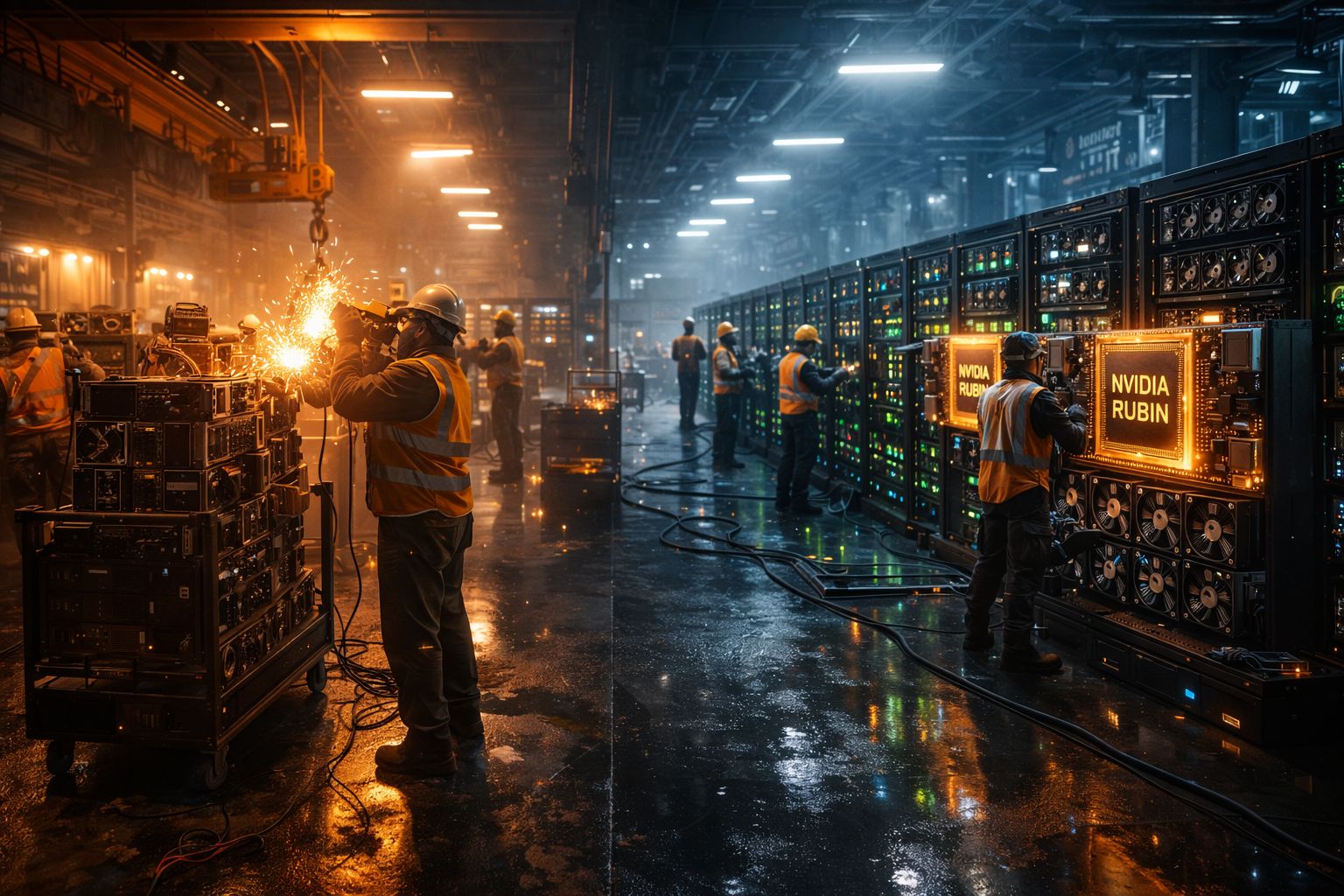
At CES 2026, Nvidia CEO Jensen Huang confirmed that the company’s Rubin AI platform is no longer a future roadmap item. It is already being manufactured and deployed. Rubin is designed to dramatically increase AI training and inference performance while improving energy efficiency at scale.
This matters because AI workloads now require massive data center capacity, including dense compute racks, advanced cooling systems, and long term power contracts. These are the same core assets Bitcoin miners already control.
Why Bitcoin Miners Are Turning Toward AI
Bitcoin miners operate energy intensive facilities optimized for continuous computation. Over the past decade, miners have invested billions into infrastructure such as industrial real estate, high voltage grid connections, cooling systems, and operational expertise in running data centers at scale.
As competition in Bitcoin mining intensifies and margins fluctuate with price cycles and halving events, many miners are seeking more stable and diversified income. Hosting AI workloads offers predictable, contract based revenue that is not directly tied to Bitcoin price volatility.
Rather than replacing mining, AI is becoming an additional layer of monetization for existing facilities.
Power and Compute Are Now Strategic Assets
The rise of large scale AI has created fierce competition for electricity and data center capacity. Hyperscalers, cloud providers, and AI startups are all bidding for access to reliable power and suitable locations.
Bitcoin miners often have long term power agreements and sites located near energy generation sources. This gives them a strategic advantage in an environment where securing new capacity has become increasingly difficult.
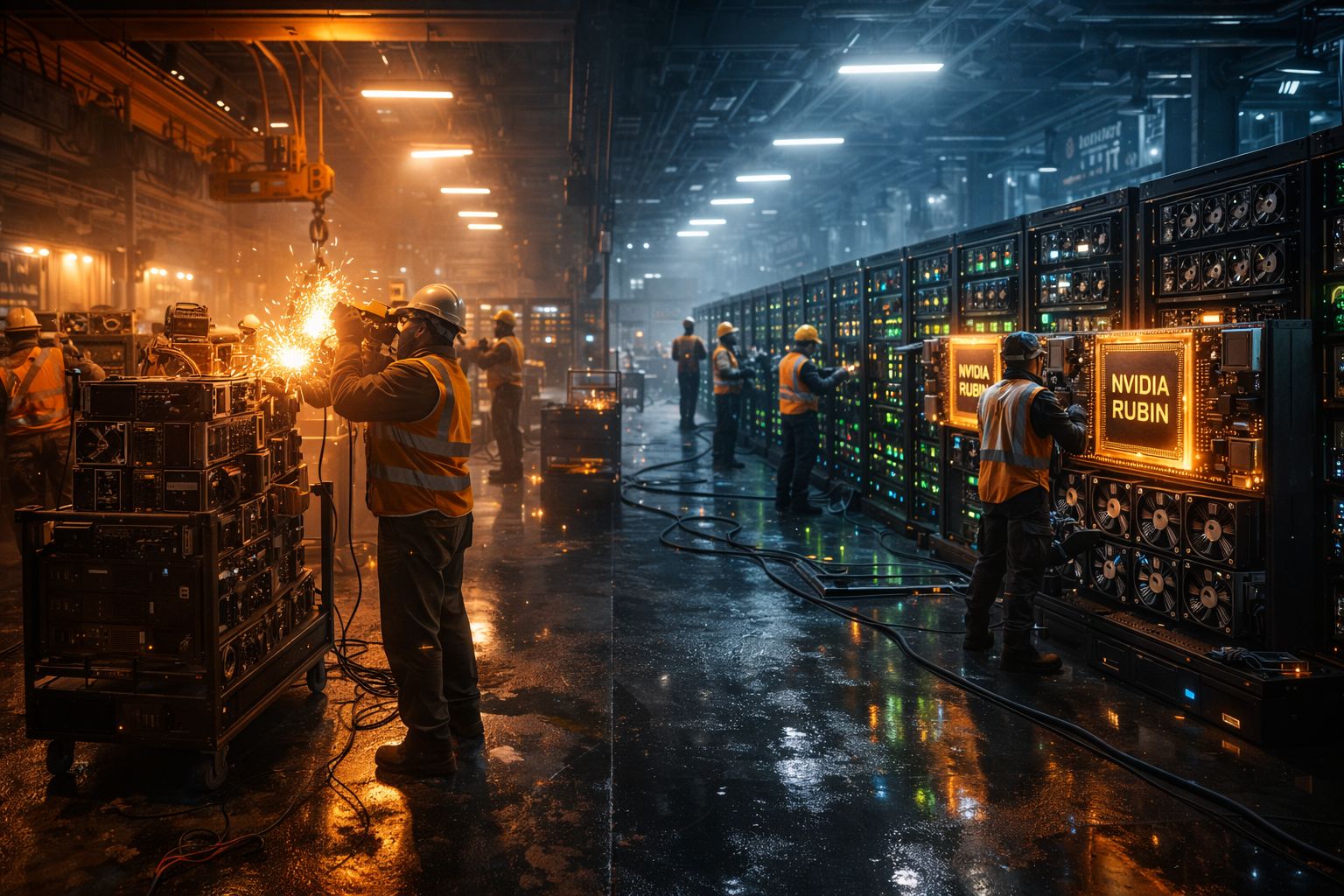
In many cases, miners are marketing themselves as infrastructure providers offering power, cooling, and space, while AI customers bring their own hardware such as Nvidia GPUs.
A New Business Model for Mining Companies
The pivot toward AI reflects a broader evolution in how mining companies define themselves. Increasingly, they are no longer positioning as pure Bitcoin miners but as digital infrastructure operators.
This hybrid model allows companies to allocate compute dynamically. During periods when mining profitability declines, capacity can be redirected toward AI or high performance computing workloads. When mining economics improve, resources can be shifted back.
This flexibility helps smooth revenue and reduce exposure to single market risks.
Implications for the Bitcoin Network
From a network perspective, this shift may contribute to further consolidation among miners. Larger operators with access to capital and infrastructure are best positioned to pursue AI partnerships. Smaller miners without scale may struggle to compete for power or funding.
At the same time, diversification may strengthen the overall resilience of mining firms, reducing forced shutdowns during downturns and supporting a more stable hash rate over time.
AI and Bitcoin Are No Longer Separate Worlds
The convergence of AI and Bitcoin mining highlights a broader trend in the digital economy. Compute, energy, and infrastructure are becoming the most valuable inputs across multiple industries.
Nvidia’s Rubin platform is a catalyst, but the underlying shift was already underway. Bitcoin miners simply happen to be well positioned to participate in it.
Rather than signaling the decline of Bitcoin mining, the move toward AI suggests maturation. Miners are evolving from single purpose operators into multi use infrastructure businesses that sit at the intersection of energy, computation, and digital networks.
Conclusion
Bitcoin miners pivoting toward AI is not a temporary reaction. It is a strategic response to changing economics and exploding demand for compute. With Nvidia’s Rubin platform now in production, AI infrastructure needs are accelerating, and miners are stepping in to meet them.
The result is a mining industry that looks less like a niche crypto sector and more like a core pillar of global digital infrastructure.
FAQs
What is Nvidia’s Rubin platform
Rubin is Nvidia’s next generation AI computing platform designed for large scale training and inference workloads. It delivers significantly higher performance and efficiency than previous architectures and is already in production as of 2026.
Why are Bitcoin miners moving into AI infrastructure
Bitcoin miners already operate energy dense data centers with long term power access and advanced cooling. These assets are directly compatible with AI workloads, allowing miners to diversify revenue beyond Bitcoin mining and reduce exposure to price volatility.
Does hosting AI replace Bitcoin mining
No. Most miners are adopting a hybrid model. Bitcoin mining continues alongside AI hosting, with compute resources allocated based on profitability and long term contracts rather than fully abandoning mining operations.
How does AI demand affect Bitcoin mining costs
AI companies compete with miners for electricity, land, and data center capacity. This can push power prices higher and increase competition, favoring larger miners with established infrastructure and capital access.
Will this shift centralize Bitcoin mining further
It may contribute to consolidation, as large miners are better positioned to secure AI contracts and finance infrastructure upgrades. Smaller miners may face increasing pressure if they cannot scale or diversify.
Is this trend temporary or long term
The shift is structural. AI compute demand is growing rapidly, and Bitcoin miners are adapting their business models to reflect long term changes in how compute and energy are valued.
Sponsored By:

Unlock the power of your Bitcoin with Money On Chain, the Bitcoin-backed DeFi protocol on RSK that issues DOC—a stablecoin pegged 1:1 to USD for rock-solid stability amid volatility, proven through overcollateralization and risk-sharing that survived the 2020 crash without a hitch. Harness BTC's unmatched security and censorship resistance while earning yields up to 20% via leveraged BPro tokens and governing with MoC for rewards and upgrades—all in a trustless, transparent ecosystem. Transform idle BTC into productive assets today: Visit moneyonchain.com and start building!
That's all for today, see ya tomorrow! If you want more, be sure to follow our X (@croxroadnewsco), Instagram (@croxroadnews.co), Youtube (@libertarianbtc), Tiktok (@croxroadnews) and nostr - [email protected]
VISIT OUR STORE

The Best Merch For Bitcoin Maxis
Visit Crox Road Store 👉🏻 https://croxroad.store/
FOLLOW US ON NOSTR

DISCLAIMER: None of this is financial advice. This newsletter is strictly educational and is not investment advice or a solicitation to buy or sell any assets or to make any financial decisions. Please be careful and do your own research.
You May Also Like
Why Morgan Stanley’s Bitcoin ETF Filing Matters More Than It Seems
Strategy Stock Hits Fresh Lows as Share Sales Fund More Bitcoin
Bullish or Bearish? Bitcoin’s 2026 Outlook Under the Microscope
Why China’s Latest Bitcoin Mining “Crackdown” Was Overstated
Tether CEO Warns an AI Bubble Could Become Bitcoin’s Biggest Threat
External Links
Links From Our Sponsors
If You Like Our Content And Want To Help Us To Make It Better, You Can Buy Us One (Or More!) Coffee CLICKING HERE
Reply